
Small accessories can be surprisingly difficult to merchandise. There may be dozens or even hundreds of individual styles, but very little physical space available to present them.
The challenge is finding a way to offer plenty of choice without turning the display into a wall of clutter.
More Selection Doesn’t Have to Mean More Floor Space
Customers generally want options, but they don’t necessarily need to see every option at once.
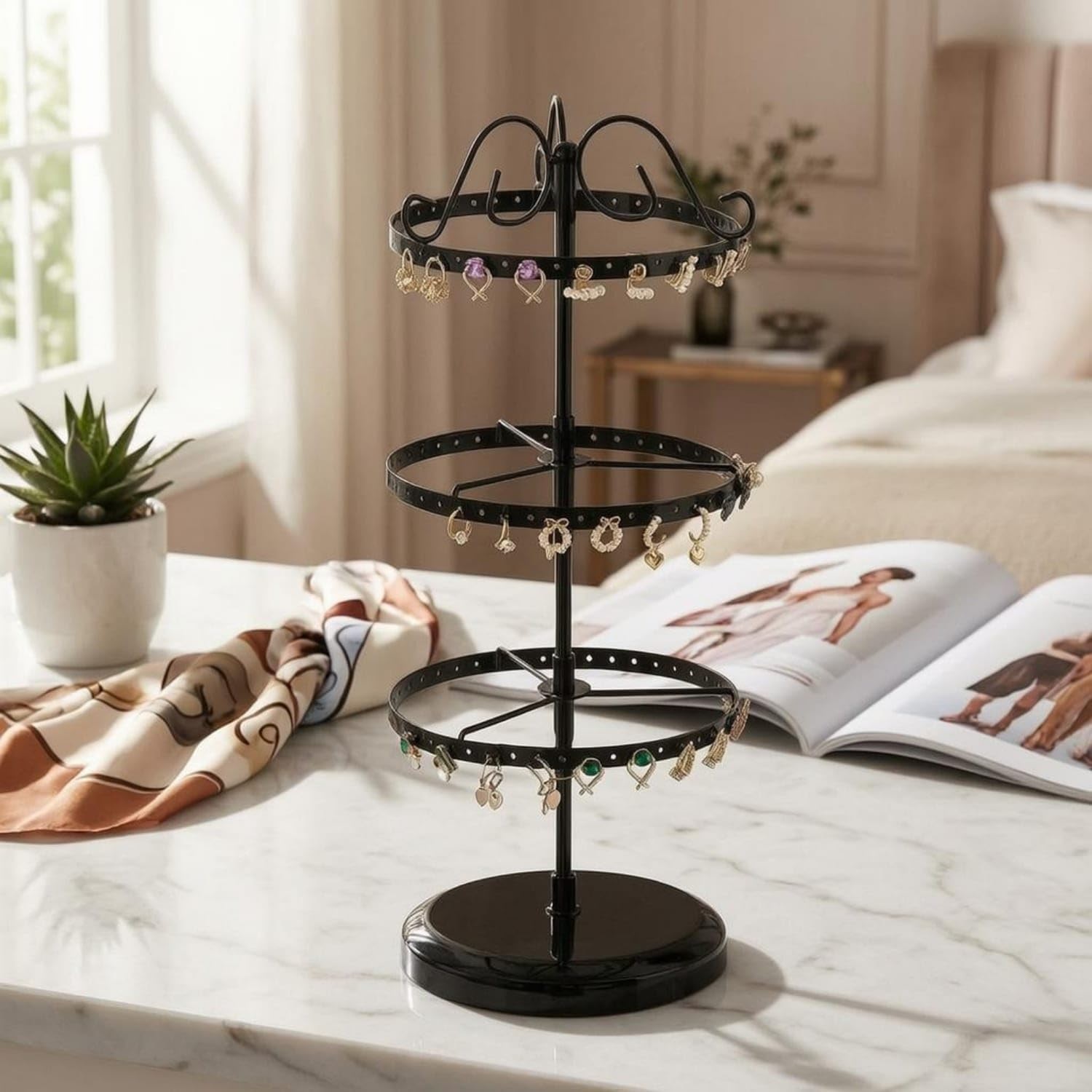
A compact rotating fixture can make use of vertical space while allowing customers to browse different sides of the display. This is particularly useful for smaller products that would otherwise require a large amount of wall or counter space.
It can also make a section feel more interactive because customers can physically move around the display to see what’s available.
Make Browsing Simple
When a display contains a large selection, organization becomes critical.
Products can be grouped by:
- Style
- Colour
- Material
- Price
- Collection
Customers should be able to understand the arrangement quickly. If they have to examine every individual item to figure out what they’re looking at, the display isn’t doing enough of the organizational work.
Vertical Space Is Often Underused
Retailers naturally think about floor area first.
But the space above the normal browsing level can provide plenty of additional merchandising capacity. A tall fixture allows products to be presented at several levels without requiring a wide footprint.
A spinning earring display is a good example of this approach. Instead of dedicating an entire wall or counter to one category, a rotating unit can hold a large assortment within a relatively compact area.
That can be particularly useful for smaller stores.
Keep Popular Products Easy to Reach
Not every product needs to occupy the same position.
Best sellers and frequently requested styles should be positioned where customers can easily see and access them. Less popular or more specialised options can occupy secondary positions.
This makes the display easier to shop while still maintaining a broad selection.
Don’t Ignore Stability
Rotating fixtures need to remain steady while customers browse.
If a display moves too easily, wobbles, or feels unstable when customers turn it, people may be less inclined to interact with it.
Fixtures should feel solid enough for normal customer use while still rotating smoothly.
Consider Traffic Around the Display
A rotating display can encourage customers to stop, which is useful—but it also means you need enough space around it.
Avoid positioning one directly in a narrow walkway. Customers should be able to browse without blocking other shoppers.
This is especially important during busy periods.
Refresh the Selection
Even a large display can become invisible to regular customers if the products never change.
Rotate seasonal merchandise into more visible positions, introduce new arrivals, and move slower-selling styles around occasionally. These small changes give repeat customers something different to discover.
Keep It Easy for Staff
Staff should be able to restock the display without having to remove half the merchandise.
An organized fixture makes inventory checks and product replacement much easier. It also reduces the chance of styles becoming mixed together as customers browse.
A Compact Solution for a Large Selection
Rotating fixtures are useful because they combine visibility, capacity, and movement in one relatively small footprint.
For retailers selling jewelry, accessories, or other compact merchandise, that can be a practical way to offer customers plenty of choice without sacrificing valuable floor space or turning the sales area into a cluttered wall of products